Free stroke recovery book
You’re still you.
Even when you
don’t feel like it.
The changes no one prepared you for. The questions you can’t quite put into words. Still You: Emotional Recovery After Stroke is a compassionate guide for survivors and caregivers, written by a neurosurgeon.
Read the free book Prefer Kindle or paperback?The complete PDF. No email. No sign-up.
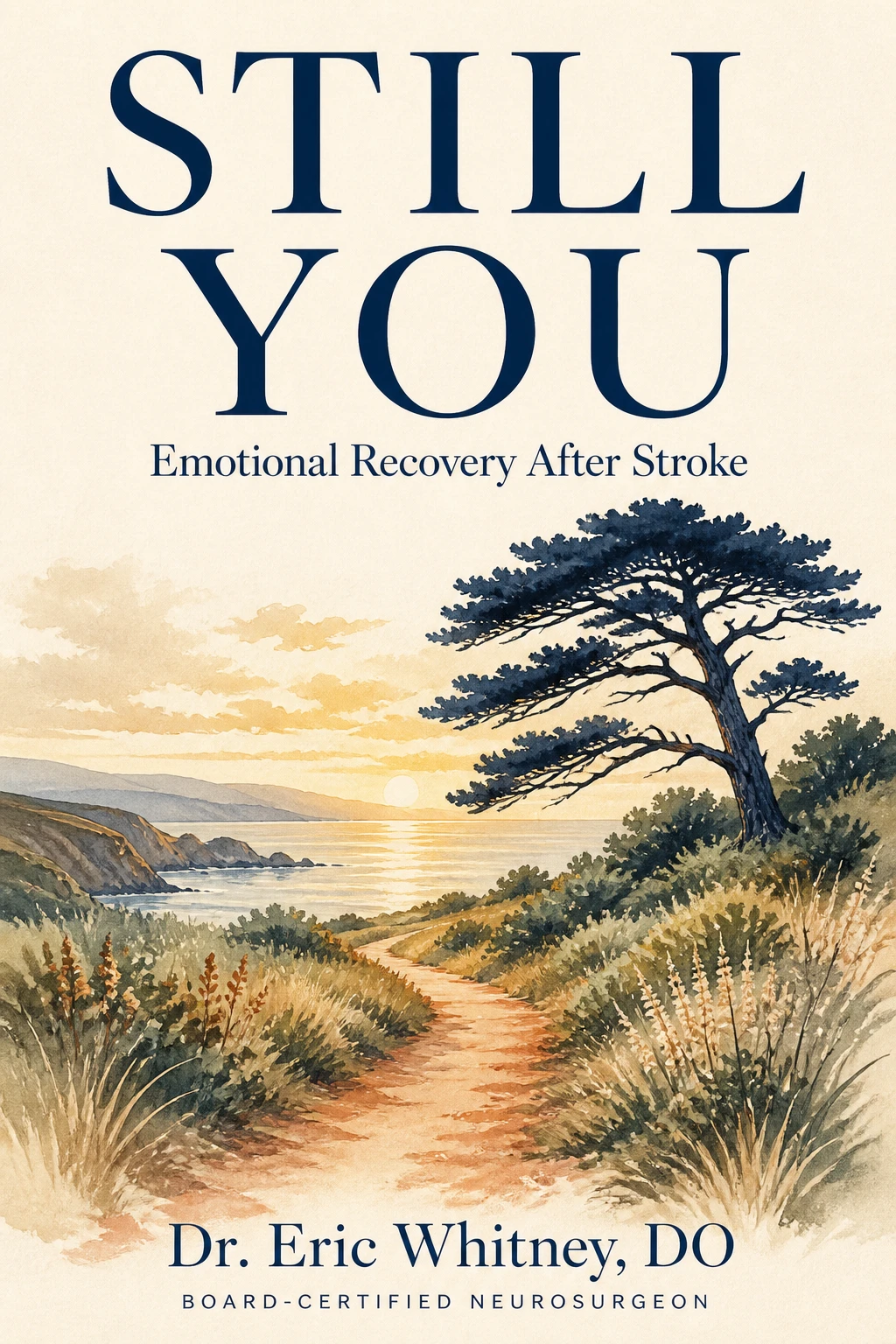
A little understanding.
A place to begin.
16 thoughtful chapters
Read at your own pace
Evidence-rated
Every tool labeled Tier 1 to Tier 4
For you & your people
Survivors, caregivers, clinicians
Free, no strings
PDF and EPUB, no email required
Why this book exists
You survived. Everyone says you're lucky. So why don't you feel like yourself?
After a stroke, the medical system measures what it can see: the scan, the blood vessels, the strength in your arm. When those look good, recovery is declared a success. Then you go home, and the part nobody prepared you for begins. The fatigue that sleep does not fix. Emotions that arrive at the wrong time, or do not arrive at all. The grief for a life and a self that feel out of reach. The question that wakes you at night: Am I still me?
“We discharge patients into a void. We tell them to call if they have headaches, vision changes, or seizures. We do not tell them to call if they feel like a stranger in their own body.”
Dr. Whitney wrote this book after years of watching patients with excellent surgical outcomes come back to his office months later, struggling with changes no one had named for them. It explains the neurology behind those changes in plain language, gives you words for experiences that are hard to describe, and lays out what actually helps, with the evidence for each tool clearly labeled.
It is not a promise that you will get back to normal. It is a map forward, into who you are becoming.
Written for the three people in the room
The survivor
You had the stroke. Your scans are stable, but you are tired in a way no one understands, your emotions have changed, and you are not sure who you are now. This book was written to you, in the second person, without platitudes.
The caregiver
You love someone who came home different. A full chapter, For Your People, is written directly to spouses, partners, adult children, and friends: what is happening, how to help, and how not to burn out doing it.
The clinician
You see this pattern in clinic and have nothing to hand patients. The toolkit rates every intervention by evidence tier, and the companion site offers a screening framework and clinical reference you can use today.
Inside the book
Start with what you need today.
The book opens with a page that is yours to write on, then moves from what happened in your brain, through the invisible changes and the grief nobody mentions, into a practical toolkit and the longer arc of becoming yourself again.

- 01
The Stroke: What Actually Happened
A plain-language account of ischemic and hemorrhagic stroke, and why the aftermath makes sense.
- 02
Why You Don't Feel Like Yourself
How the circuits that generate mood, energy, and personality are affected.
- 03
The Invisible Changes
Sensory overload, cognitive fog, and the changes nobody can see on a scan.
- 04
The Energy Equation
Budgeting the energy you have when fatigue does not respond to rest.
- 05
The Grief Nobody Mentions
Grieving the life and the self you had, without anyone naming it.
- 06
Am I Still Me?
Identity when the person you were and the person you are do not match.
- 07
The Paradox
Holding gratitude and loss at the same time.
- 08
What the Stroke Revealed
What becomes visible only after everything shifts.
- 09
The Part That Persists
What remains of you beneath all the changes.
- 10
Finding Ground When Everything Shifts
Steadying yourself while recovery is still moving.
- 11
The Spiritual Dimension (For Those Who Want It)
An optional chapter on meaning, faith, and the questions recovery raises.
- 12
Your Recovery Toolkit
Sleep, movement, breathwork, supplements, devices, and therapy, each labeled with an evidence tier.
- 13
For Your People
Written directly to spouses, family, and caregivers who want to help and do not know how.
- 14
The Rhythm of Recovery
Why recovery is not a straight line, and what the longer arc looks like.
- 15
The New You
Building an identity that includes what happened.
- 16
From Patient to Person
The moment you stop being a case and start being yourself again.
- +
Appendices & bibliography
Every research source cited, so you and your clinicians can check the evidence.
Get the book
Read it free. Or hold it in your hands.
The digital editions will always be free. The paperback exists because many survivors told us screens are exhausting after a stroke, and because a book on the nightstand gets picked up in a way a file does not.
No email address. No sign-up. 197 pages, 16 chapters, yours to keep.
Paperback coming soon
The paperback is currently in Amazon’s review process. While you wait, the complete digital book is available above at no cost.
Email me when the paperback is out →Reader reviews
Read it? Tell the next survivor what to expect.
If the book helped you put an experience into words, you’re welcome to share it. Your perspective can help another reader decide where to begin. Every review is read by Dr. Whitney.
No public reviews yet.
Yours would be the first one another survivor reads. It does not need to be polished. What did the book help you understand? Who would you hand it to?
Leave a review
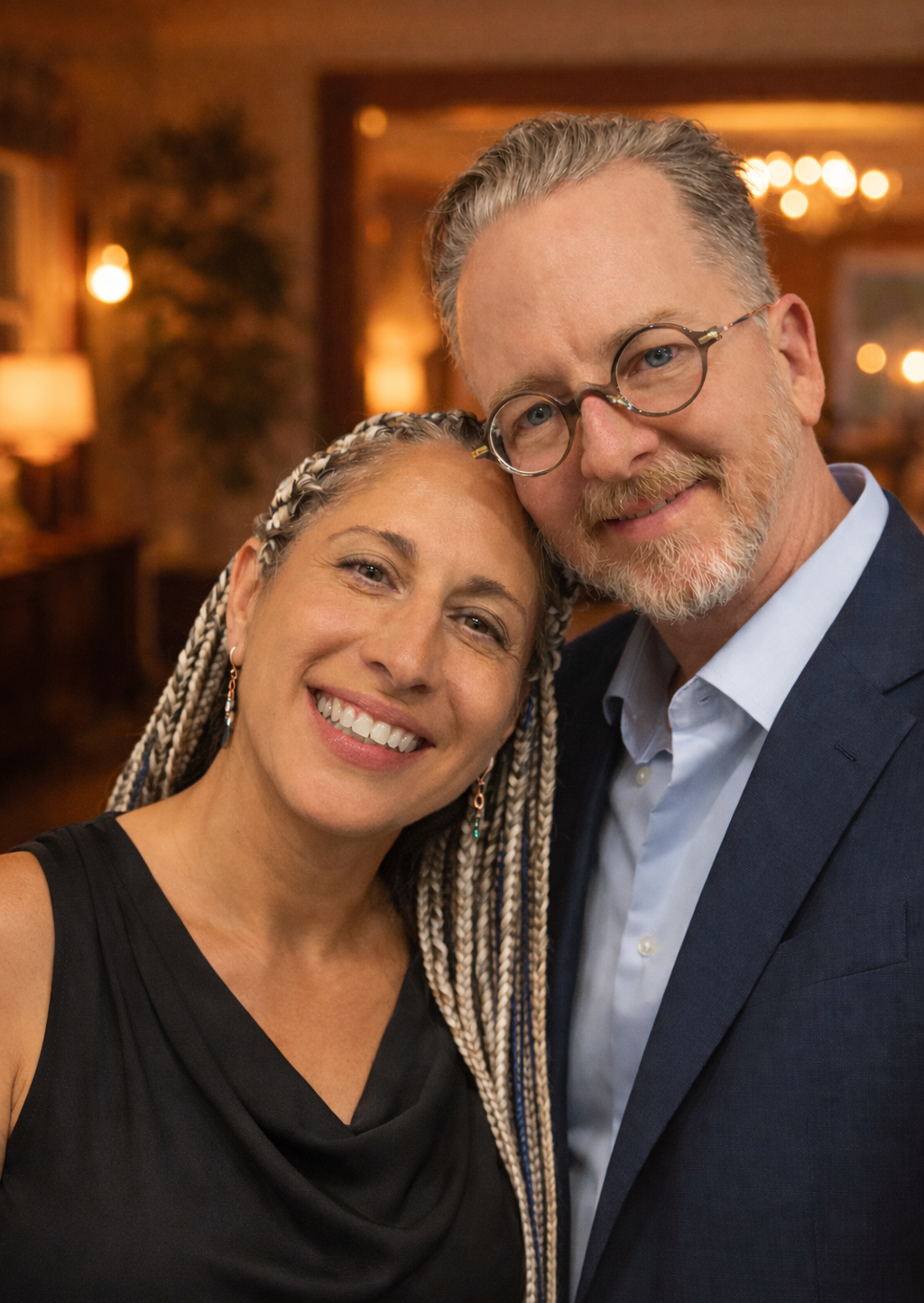
About the author
Dr. Eric Whitney, DO
Dr. Whitney is a board-certified neurosurgeon practicing in Southern California and a published researcher on stroke, traumatic brain injury, and neurological recovery. He completed his neurosurgical residency at Arrowhead Regional Medical Center and Desert Regional Medical Center and holds board certification from the American Osteopathic Board of Surgery in Neurosurgery.
He has been on both sides of this: the surgeon who gets the call in the middle of the night, and the family member who watched someone he loves die of a hemorrhagic stroke. He wrote Still You to close the gap between a successful treatment and a patient who no longer feels like themselves.
The book was written independently, with no involvement from supplement, device, or pharmaceutical companies. Medical content was reviewed by Dr. Whitney before publication.
Full biography and publications →Pass it on
Know someone who came home from a stroke different?
Most people find this book because someone who loved them sent the link. Share it with a survivor, a caregiver, a support group, or a clinic.
Questions about the book
Is the stroke recovery book really free?
Yes. The complete book is free to download as a PDF or EPUB, with no email address, account, or payment required. Information about how to recover from a stroke should not cost money to read. A printed paperback is coming soon for people who prefer a physical copy.
Which format should I download, PDF or EPUB?
PDF opens on any phone, tablet, or computer and prints cleanly. EPUB reflows to your screen size and works with Apple Books, Kobo, and most e-readers. For a Kindle, email the EPUB file to your Send-to-Kindle address and it appears on your device.
Who is this book for?
Stroke survivors who no longer feel like themselves, the spouses, family members, and caregivers supporting them, and the clinicians who treat them. One chapter is written directly to caregivers, and the recovery toolkit labels every recommendation with an evidence tier so clinicians can see where the research stands.
Is this medical advice?
No. Still You is educational. It explains what happens after stroke and what the research supports, but it does not replace your neurologist, rehabilitation team, or therapist. Talk to your own clinicians before changing any treatment, medication, or supplement.
Can I share the book with my stroke support group or my patients?
Please do. Share the link to this page so people always get the current edition, rather than re-uploading the file elsewhere. Clinicians who want printed copies for a waiting room or discharge packet can email [email protected].
How do I leave a review?
Use the review form on this page. Reviews are read personally by Dr. Whitney and, with your permission, published here. If you read the Kindle edition, a review on Amazon is what puts the book in front of other survivors searching there.
Prefer to read online? The core content of the book is on the Still You stroke recovery site, organized by topic, with guides on post-stroke depression, fatigue after stroke, personality changes, and the recovery timeline.
“For every patient who has sat across from me and asked, Am I still me?”
You are.
No email address. No sign-up. 197 pages, 16 chapters, yours to keep.
Medical disclaimer: Still You and this website provide general information about emotional recovery after stroke. They are not a substitute for professional medical advice, diagnosis, or treatment. Always consult your neurologist, rehabilitation team, or other qualified healthcare provider with questions about your condition. No doctor-patient relationship is created by reading the book or using this site.
Emergency: If you notice signs of a new stroke (sudden weakness, facial droop, trouble speaking, vision loss), call 911 immediately. Full disclaimer · Privacy